
Yes. Indoor plants and living green walls demonstrably reduce noise in open-plan commercial environments. Research by Costa & James (2018) found that interior plants reduce perceived noise levels by 5–10 dB - equivalent to cutting the apparent loudness of a sound roughly in half. In New Zealand's increasingly open, hard-surfaced commercial interiors, this is a measurable performance benefit, not a decorative one.
Open-plan offices have become the dominant commercial workplace format across New Zealand and globally. They improve collaboration, make better use of floor space, and signal a particular kind of modern culture. But they also create acoustic conditions that undermine the very productivity they are meant to foster.
Unispace's Global Workplace Insights survey (2025), drawn from more than 77,000 respondents, found that 64% of office employees spend most of their working day on tasks requiring concentration, and noise is one of the primary factors that disrupts it. Research published in the Journal of Experimental Psychology: Applied (Nieuwenhuis et al., 2014) found a 15% productivity increase when plants were added to lean workspaces, a gain that partly reflects the improved environmental quality, acoustic included, of the space. The question for building managers, designers, and corporate occupiers is not whether noise matters, but whether plants and living walls are a credible part of the answer.
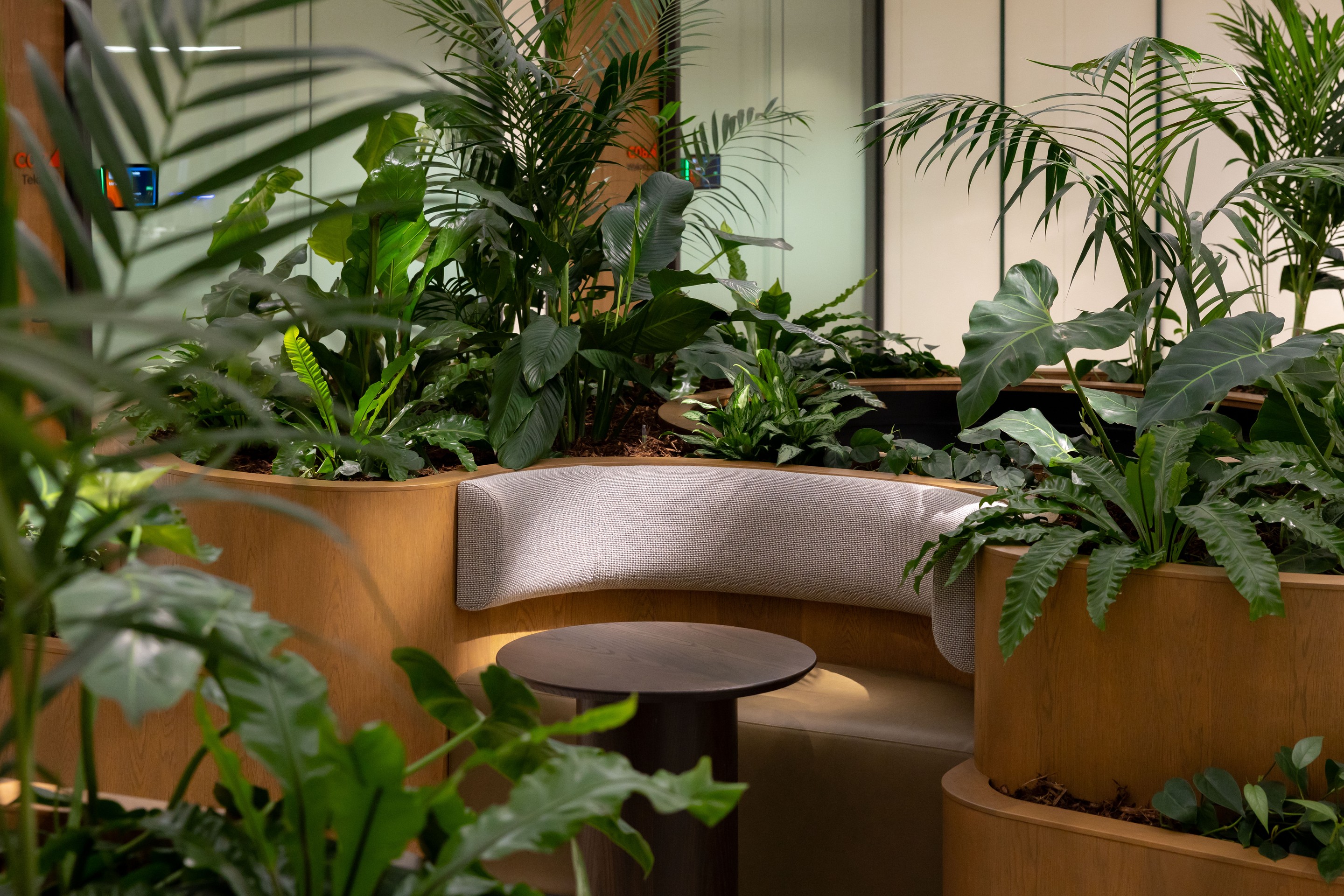
Do plants actually absorb sound, or is the effect psychological?
Both. The acoustic benefits of indoor plants operate through two distinct mechanisms: physical sound absorption and psychological calming, and research supports both.
The physical effect is real and well-documented. Studies compiled by Azkorra et al., Davis et al. (2017), and Wong et al. (2014–2017) found that living green walls display similar or better acoustic absorption than common building materials, particularly at voice-frequency sound around 60 dB, precisely the frequency range that creates distraction in open-plan offices, lobbies, and public spaces.
The psychological mechanism is equally well-supported. Exposure to natural elements reduces cognitive arousal and the perceived intrusiveness of background noise. The result is a workplace that feels quieter, even in conditions where decibel measurements show only modest changes. For building occupants, perception and reality are equally important determinants of workplace experience.
How much noise reduction can plants actually deliver?
The figures vary by plant type, installation format, and room conditions, but the research offers clear benchmarks.
Costa & James (2018) measured a 5–10 dB reduction in perceived noise levels in office environments with indoor plants. A reduction of 10 dB is perceived as roughly halving the loudness of a sound, a significant shift in a working environment. Specific plant types and systems perform as follows:
- Living green walls (general): comparable to or better than standard building materials (Azkorra et al.; Wong et al., 2014–2017)
- Moss walls: up to 10 dB; absorption coefficient 0.96 (acoustic testing studies, 2018–2023)
- Boston ferns: up to 98% of incident acoustic energy absorbed (acoustic plant studies, 2017–2020)
- Baby tears (Soleirolia soleirolii): up to 90% absorption across audible frequencies (acoustic plant studies, 2017–2020)
- Container plants (general): 5–8 dB perceived reduction (Costa & James, 2018; environmental psychology research)
The substrate behind a living wall also plays a role. Dense growing media, particularly mineral wool or foam-based materials, contribute additional sound absorption, making system selection a meaningful design decision when acoustic performance is part of the brief.
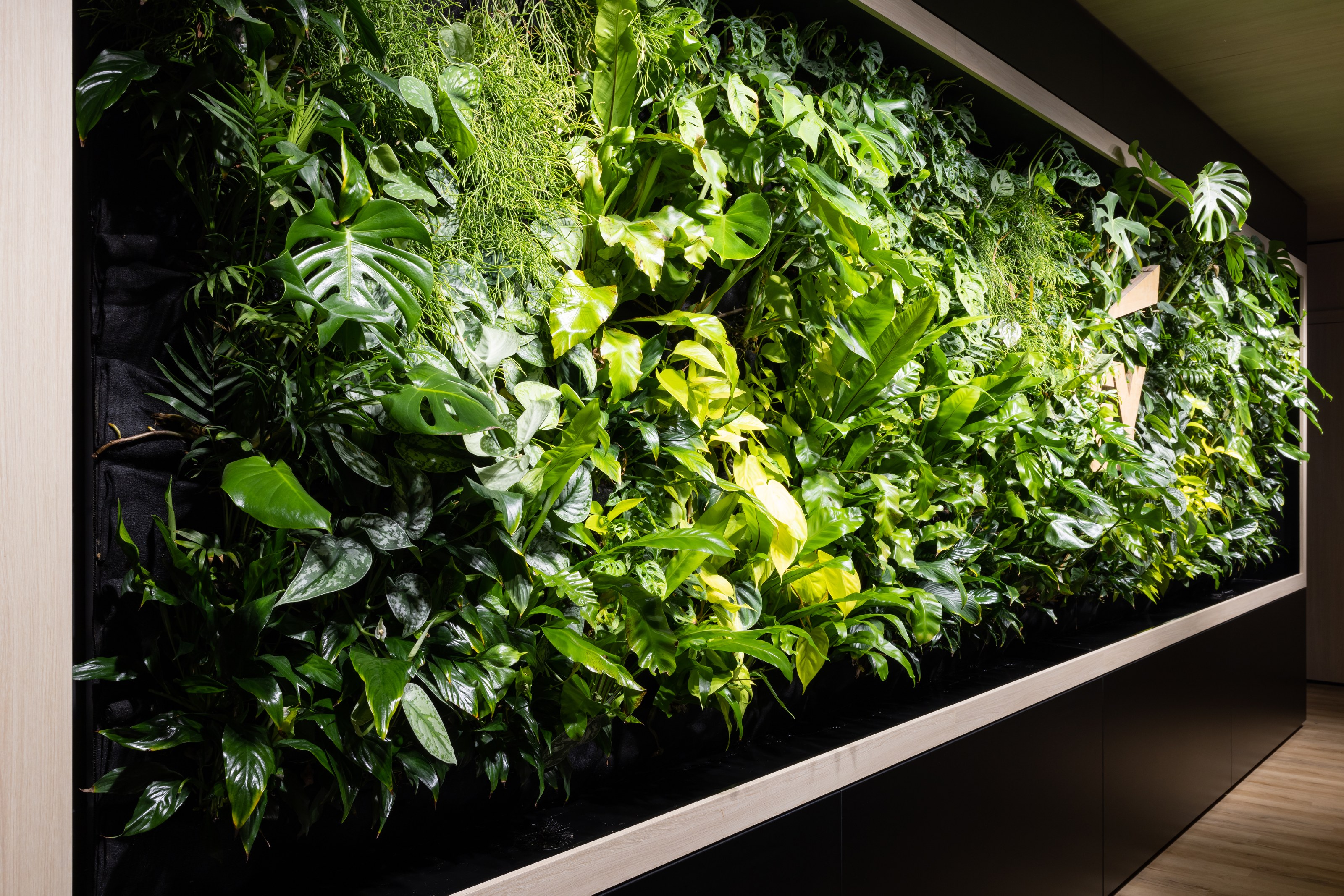
Which office zones benefit most from acoustic planting?
Open-plan offices with hard surfaces, concrete ceilings, polished floors, glass partitions, create the worst acoustic conditions because sound reflects rather than absorbs. These are precisely the environments where living green walls and dense planted installations deliver the greatest benefit, because they introduce absorptive, irregular surfaces that scatter and dampen reflected sound.
The zones that benefit most are breakout and collaboration areas, where voice frequencies dominate; reception lobbies, where echo and reverberation affect first impressions; corridors and throughways, where hard surfaces amplify footfall and conversation; and focus zones adjacent to high-traffic areas, where planted screen dividers interrupt direct sound paths.
Living walls positioned between workstations, rather than only on perimeter walls, deliver the most targeted acoustic benefit, because they intercept sound at the source rather than absorbing its reflections.
Can plants replace acoustic ceiling panels or partition systems?
No, and GreenAir would not claim otherwise. Plants are not a substitute for dedicated acoustic engineering in spaces with severe noise problems. Mechanical ventilation, specialist ceiling treatments, and purpose-built partition systems each address dimensions of the noise problem that plants cannot fully replicate.
What indoor plants and living walls offer is complementary acoustic performance, delivered alongside environmental and wellbeing benefits that acoustic products cannot match. No ceiling baffle improves perceived air quality, reduces stress, or changes the visual character of a space. The honest case for plants in acoustically challenging offices is that they contribute measurably to the acoustic environment while simultaneously doing things no other building material can.
What does this mean for New Zealand's commercial buildings?
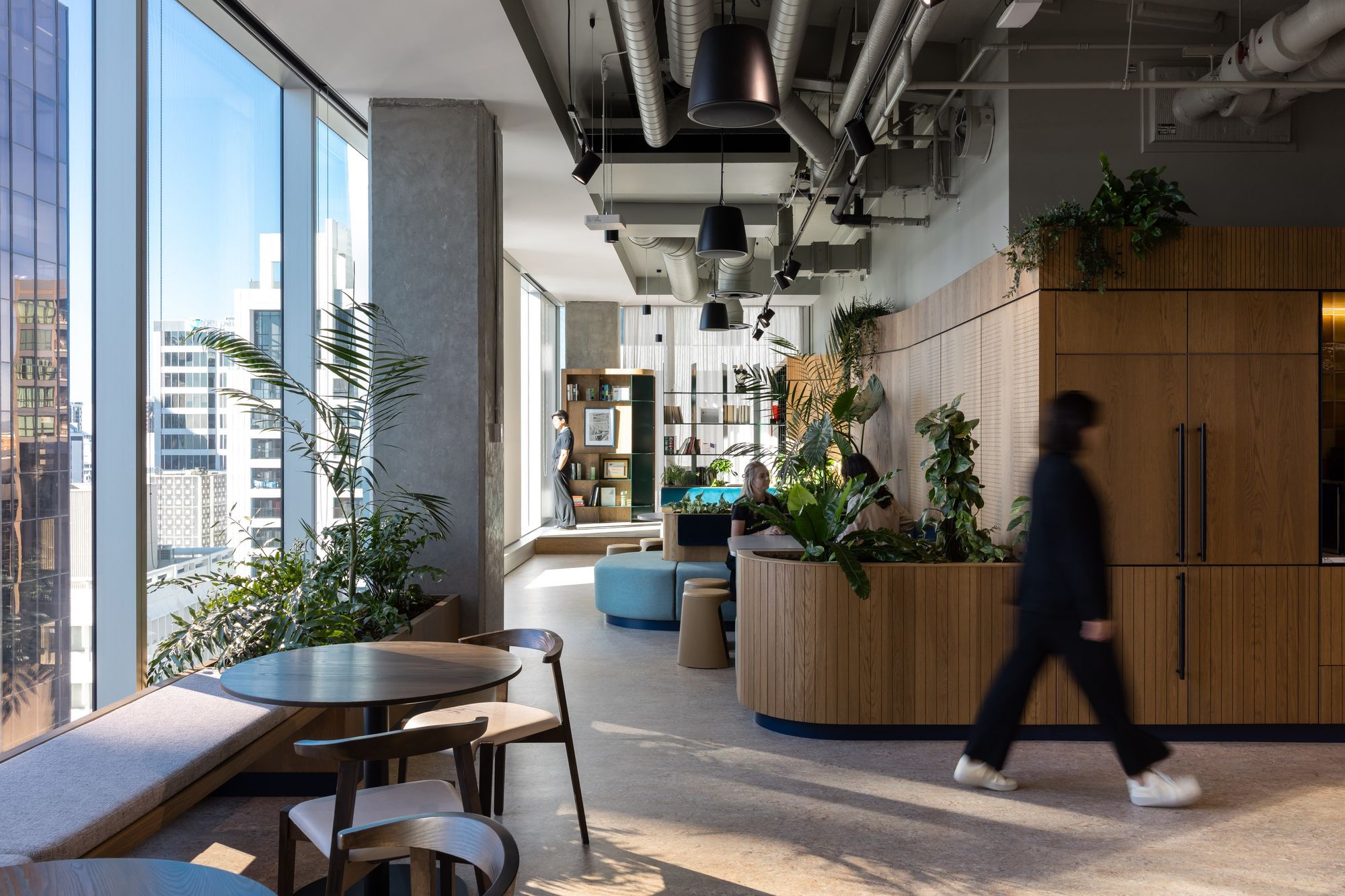
New Zealand's commercial market has followed the same global trend: open-plan, high-glass, hard-surfaced offices built to maximise floor efficiency. The acoustic consequences are significant, particularly in Wellington, where tightly planned commercial floors leave little room for dedicated acoustic treatment.
GreenAir's experience across New Zealand's commercial buildings, including its monitored installation at the Majestic Centre in Wellington, where smart sensors track environmental conditions across 12 zones in real time, confirms that acoustic performance is a factor in species selection and system format. Hard-surfaced, reverberant interiors benefit from higher-density planting and living wall systems. Quieter environments may be better served by planted containers that deliver wellbeing and environmental benefits without over-treating the acoustic character of the space.
"Noise is the invisible problem in most open-plan offices. It costs productivity, and it costs wellbeing, but it rarely makes it into the brief. When we're designing an installation, we're thinking about the acoustic character of the space from the first site visit." — Simon Chamberlain, GreenAir