
Walk into a workplace where the greenery is thriving and you feel it before you can name it. The air feels calmer, the space feels considered, and people seem to breathe a little easier. Walk into one where the plants are merely surviving and you feel that too. The difference rarely comes down to how many plants are in the room. It comes down to who is reading the building and keeping those plants healthy over years, not weeks.
For New Zealand facilities managers evaluating providers, what a full-service plant hire agreement actually covers isn't always clear. Some agreements bundle everything from design to ongoing care. Others quote an attractive rate but exclude replacements, or charge separately for maintenance. This article breaks down what full-service workplace plant hire typically includes, what to ask potential providers, and how to tell whether a service will keep your greenery flourishing rather than slowly declining.
Key Takeaways: Full-Service Workplace Plant Hire in New Zealand
- Full-service plant hire brings design consultation, plant supply, installation, ongoing maintenance, and replacements together under a single agreement.
- Professional maintenance typically means fortnightly visits with species health assessments, pruning, cleaning, and pest management.
- GreenAir grows over 90 percent of its plants in-house at its Kumeu nursery, selecting species matched to each building's specific conditions.
- The monthly rental fee covers the plants, service and maintenance, while an upfront cost covers the planters, hardware and installation, so the ongoing responsibility for plant health sits with your provider rather than you.
- Site assessments of light, humidity, and airflow determine which species will thrive rather than merely survive in your workplace.
What Is Full-Service Workplace Plant Hire?
Full-service workplace plant hire is a rental model where a provider takes responsibility for the whole life of your interior planting, from the first site assessment through to the care that keeps it healthy. You pay a regular fee, and your provider carries the risk of keeping plants alive and performing well.
This is a different arrangement from buying plants outright, where the watering, pest control, and replacement of anything that dies all fall to you. With a hire service, underperforming plants are swapped out as part of the agreement, so the space stays alive without you managing it.
The full-service distinction matters. Some providers supply plants without maintenance. Others maintain plants but charge separately for replacements. A genuine full-service arrangement brings these elements into one predictable cost, so the greenery is treated as essential infrastructure rather than a one-off purchase.
What Does Full-Service Plant Hire Typically Include?
A thorough workplace plant hire agreement generally covers five core elements. Understanding each one helps you compare providers and spot the gaps in a quoted service.
Site Consultation and Design
Before a single plant arrives, a provider should read the building. That means evaluating light levels across different zones, measuring humidity, and understanding how air moves through the space. At GreenAir, this reading extends to how people move through your building, because a plant is placed for the people who will live alongside it, not only for the wall behind it.
From that analysis, designers recommend species suited to each area's real conditions. A reception desk beside a window asks for something different from a dim corridor or a meeting room with variable occupancy. Reading the building as carefully as we read the brief is what separates planting that belongs from planting that simply fills a corner.
Plant Supply and Installation
Your provider sources and delivers plants matched to the design. The strongest providers grow their own stock or hold strict specifications with their growers, so plants arrive already acclimatised to indoor life rather than straight from an outdoor nursery. That head start is often the difference between a plant that settles in and one that struggles from day one.
Installation covers positioning, setting up planters or systems, and handling drainage properly. For larger interior planting projects, it also means coordinating with your facilities team so the work fits around the building's day.
Scheduled Maintenance Visits
Regular maintenance is where full-service hire earns its name. Most providers visit fortnightly, though the rhythm shifts with plant types and the conditions of the building.
At each visit, technicians assess plant health, adjust watering, prune, clean foliage, and check for pests. GreenAir's horticultural technicians carry out species health assessments and seasonal adjustments every time they come through, so small issues are caught before they become visible ones. At sites like the Majestic Centre in Wellington, we track conditions across twelve zones with smart sensors, matching our attention to what each part of the building is actually doing.
Plant Replacements and Guarantees
Even with proper care, plants sometimes falter. A full-service agreement should include the replacement of underperforming plants at no additional cost, an arrangement many providers describe as a healthy-plant guarantee or similar.
This clause moves the risk of plant failure from you to your provider. If something declines, they replace it. Your greenery stays consistent, and you never pay extra when nature has other ideas.
Planters and Containers
Most hire agreements include planters chosen to sit with your interior design. Some providers offer a broad range; others work within set collections. It's worth asking whether planter upgrades or custom options are available, and how they affect the agreement.
How Is Workplace Plant Hire Priced in New Zealand?
Pricing for workplace plant hire varies with plant sizes, container choices, and the scope of the service. Most providers structure it as a regular fee, and larger feature installations, living walls, or custom systems are priced by project.
The more useful question is what the greenery is worth, and what poorly maintained greenery quietly costs. The honest value calculation factors in the hidden costs of ownership: water and fertiliser, the staff hours spent on care, the plants replaced when things die, and the effect on people of greenery that looks tired. Research consistently finds that plants which merely survive deliver far less than plants that genuinely thrive, so a low rate that ends in decline is rarely the saving it appears to be.
It helps to understand how the cost is structured, because there are two parts to it. An upfront amount covers the hardware, the planters or furniture pieces that hold the planting, along with the installation itself. From there, a regular monthly fee covers the plant hire, service and maintenance. So the model doesn't erase the initial outlay; it keeps it contained and predictable, then hands the ongoing responsibility for plant health to a provider whose work is keeping it healthy. That is where recurring, professional care changes the arithmetic.
Why Does Proper Site Assessment Matter?
Because the benefit only lasts as long as the plants do. A 2023 field study published in Frontiers in Psychology found that introducing plants to office spaces improved satisfaction with the workspace, increased perceived privacy, and reduced complaints about dry air. Broader evidence points the same way, with biophilic workplaces linked to meaningful gains in wellbeing, creativity, and productivity across tens of thousands of workers (Human Spaces, 2015). Every one of those benefits depends on plants staying healthy over time.
Plants chosen without understanding a building's conditions often decline within months. At GreenAir, we've spent over two decades reading New Zealand's buildings. We track light, humidity, and temperature across zones and match species to the actual conditions of the space rather than to aesthetic preference alone.
That difference comes down to something unglamorous: matching species to the real conditions of a space, then proving it with data. A provider who skips the site assessment may quote a lower rate, but you'll see the difference when the plants start to fade.

What Questions Should You Ask Potential Providers?
When you're evaluating commercial plant hire services, a few questions reveal the difference between a supplier and a partner.
Who Supplies the Plants?
Ask whether plants come from the provider's own nursery or from external growers. Growing in-house allows for tighter quality control and more deliberate species selection. GreenAir propagates over 90 percent of its plants at our Kumeu nursery, growing stock specifically for each project so the plants that arrive are shaped by place and designed to thrive.
What Does the Replacement Policy Cover?
Get clarity on what happens when a plant underperforms. Does replacement wait on you to report the issue, or does the provider monitor for it? Are there exclusions or additional charges hiding in the detail?
How Is Maintenance Scheduled?
Understand how often visits happen and what each one includes. Ask whether the same technician looks after your account, because familiarity with a building's health patterns is part of what keeps planting well.
What Happens at Contract End?
Most hire agreements are ongoing with notice periods. Ask about minimum terms, price review schedules, and what happens to the planters if you bring the agreement to a close.
How Does Full-Service Hire Differ from Maintenance-Only Agreements?
Some businesses already own their plants and want professional care without the rental component. Maintenance-only agreements cover regular visits and treatment but typically exclude replacements.
That model can work for established planting in stable condition. When plants die, though, the replacement cost sits with you, and over time it can quietly exceed what a full-service agreement would have cost in the first place.
GreenAir offers both approaches and shapes the scope to your situation. For most facilities managers, full-service hire removes the uncertainty and keeps greenery performing at the standard it was designed for.
What Types of Greenery Are Available Through Hire Services?
Modern plant hire reaches well beyond potted plants on desks. Providers like GreenAir work across a broad range to suit different spaces, buildings, and intentions.
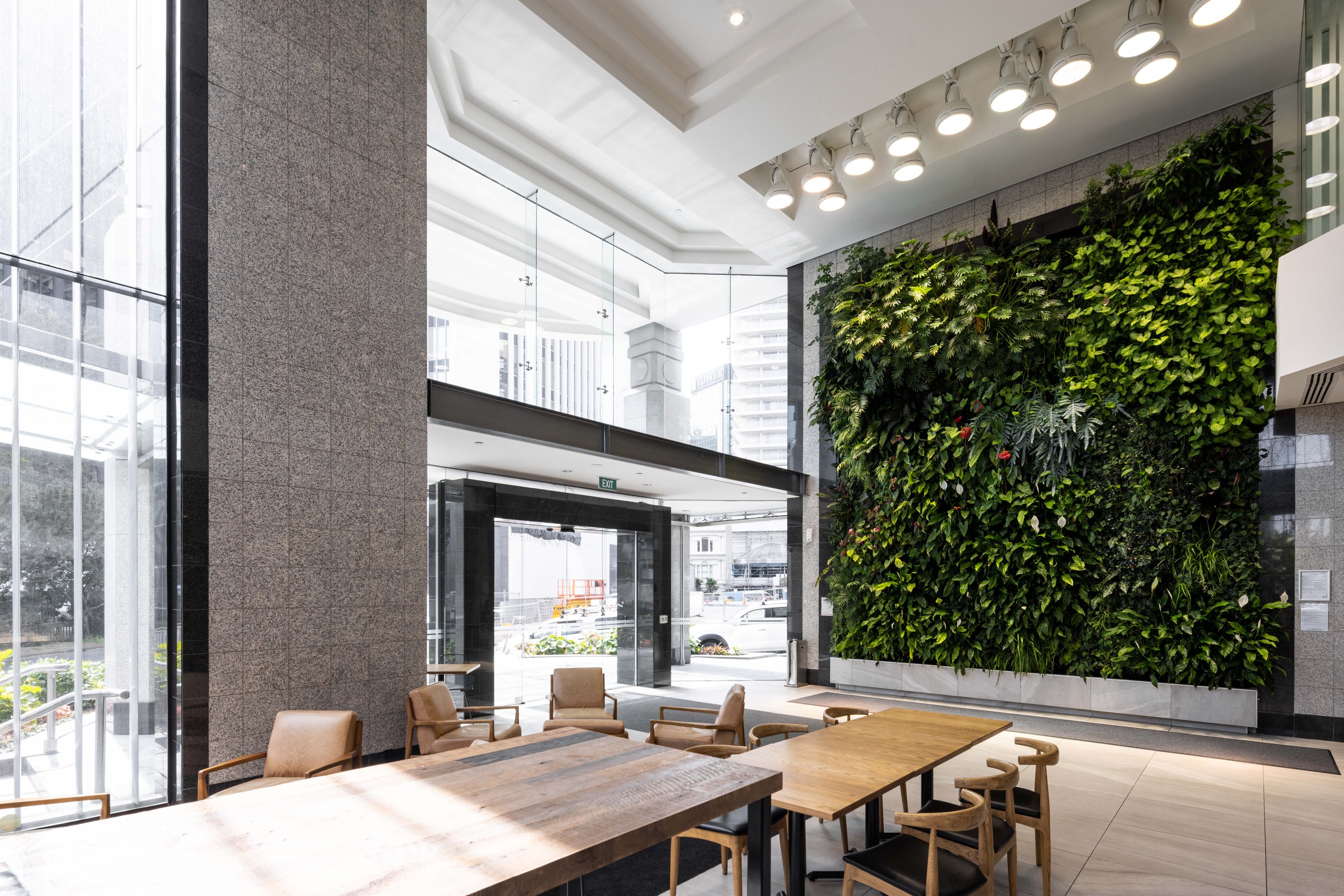
Traditional planters remain a natural fit for reception areas, corridors, and collaborative spaces. Living walls bring vertical greenery to feature surfaces and turn a blank wall into a living presence. Green screens create natural partitioning without hard barriers. Suspended units introduce plants overhead, adding life without taking floor space.
The right mix depends on your building's conditions, your intentions, and the outcomes you're after, which is exactly why a thorough site assessment comes first. You can see how these ideas come together across GreenAir's commercial projects in Auckland, Wellington, and other New Zealand cities.
Choosing a Full-Service Plant Hire Provider in New Zealand
Full-service workplace plant hire brings design, supply, installation, maintenance, and replacements into one agreement. It removes the uncertainty of plant ownership and keeps your greenery healthy, which is the only condition under which greenery earns its place.
The evidence for what plants do in workplaces is now too strong to ignore. But those benefits depend on plants that thrive in their conditions over months and years, not specimens that look good on day one and fade from there.
When you compare providers, look past the weekly rate to the things that actually protect that outcome: how they read your building, where their plants come from, what their replacement policy really covers, and whether they design for the long term. Our cities are shifting from concrete to calm, and the spaces people remember aren't usually the most expensive ones. They're the ones that feel alive.
What could greenery do for your workplace?
FAQs About Workplace Plant Hire and Maintenance in New Zealand
What is included in a typical full-service plant hire agreement?
A full-service agreement includes site consultation, species selection, supply, installation, scheduled maintenance visits, and replacement of underperforming plants. GreenAir's service also includes species health assessments and seasonal adjustments at every visit.
How often are hired office plants maintained?
Most providers visit fortnightly, though the rhythm can shift with plant types and your building's conditions. Each visit typically covers watering, pruning, cleaning, pest inspection, and health monitoring.
Can I hire plants for a short-term event or project?
Some providers offer event hire. GreenAir focuses on long-term commercial installations, and for ongoing workplace greenery our hire agreements typically start with a twelve-month term and continue month to month from there.
What happens if a hired plant dies or looks unhealthy?
Under a full-service agreement, your provider replaces underperforming plants at no extra cost. GreenAir's approach is built to prevent that outcome in the first place, through proper species selection matched to your building's conditions.
Is plant hire more cost-effective than buying plants outright?
For most businesses, hire offers better value once you account for maintenance time, replacement costs, and the expertise it takes to keep plants healthy. With GreenAir, an upfront cost covers the planters, hardware and installation, and a monthly fee then covers the plants, service and maintenance, so you avoid owning stock you have to keep alive yourself, and the ongoing care stays with us.