
Interior planting contributes to Green Star NZ certification primarily through Indoor Environment Quality credits, biophilic design content within the wellbeing-related credits, and Innovation points. Across Green Star Interiors NZ v1.1 and Green Star Buildings NZ, well-specified interior planting can credibly contribute several points, but only when matched to measured environmental conditions, not estimated ones. GreenAir specifies to that standard across New Zealand.
Green Star NZ, administered by the New Zealand Green Building Council (NZGBC), is the country's primary rating tool for sustainable commercial buildings and fitouts. For architects and project teams, the question is rarely whether to include interior planting, it is how to specify it so that it earns credits, performs over time, and survives certification review.
Which Green Star NZ credits can interior planting contribute to?
Interior planting contributes most directly to credits within the Indoor Environment Quality area and to biophilic and wellbeing-related credits, with secondary contributions to Innovation. Under Green Star Interiors NZ v1.1 (effective from 28 April 2022), planting most often supports credits relating to occupant comfort and connection with nature. Under Green Star Buildings NZ, biophilic design content sits within the Nature category, which rewards active connections between people and nature.
The table below summarises the typical contribution.
| Credit area | Tool | How interior planting contributes |
|---|---|---|
| Connection with Nature / biophilic content | Green Star Interiors NZ v1.1 / Green Star Buildings NZ | Direct biophilic elements (plants, living walls, planted zones) within regular sight lines from workstations and circulation |
| Acoustic comfort | Interiors / Buildings | Sound absorption from densely planted walls and moss installations, particularly at voice frequencies |
| Visual comfort | Interiors / Buildings | Plants used to screen glare, soften visual contrast, and break large monolithic surfaces |
| Innovation | All Green Star tools | Documented biophilic design strategies that exceed minimum credit thresholds |
| Nature category (Buildings) | Green Star Buildings NZ | Planting integrated into a wider biophilic design strategy supporting occupant outcomes and biodiversity-aware design |
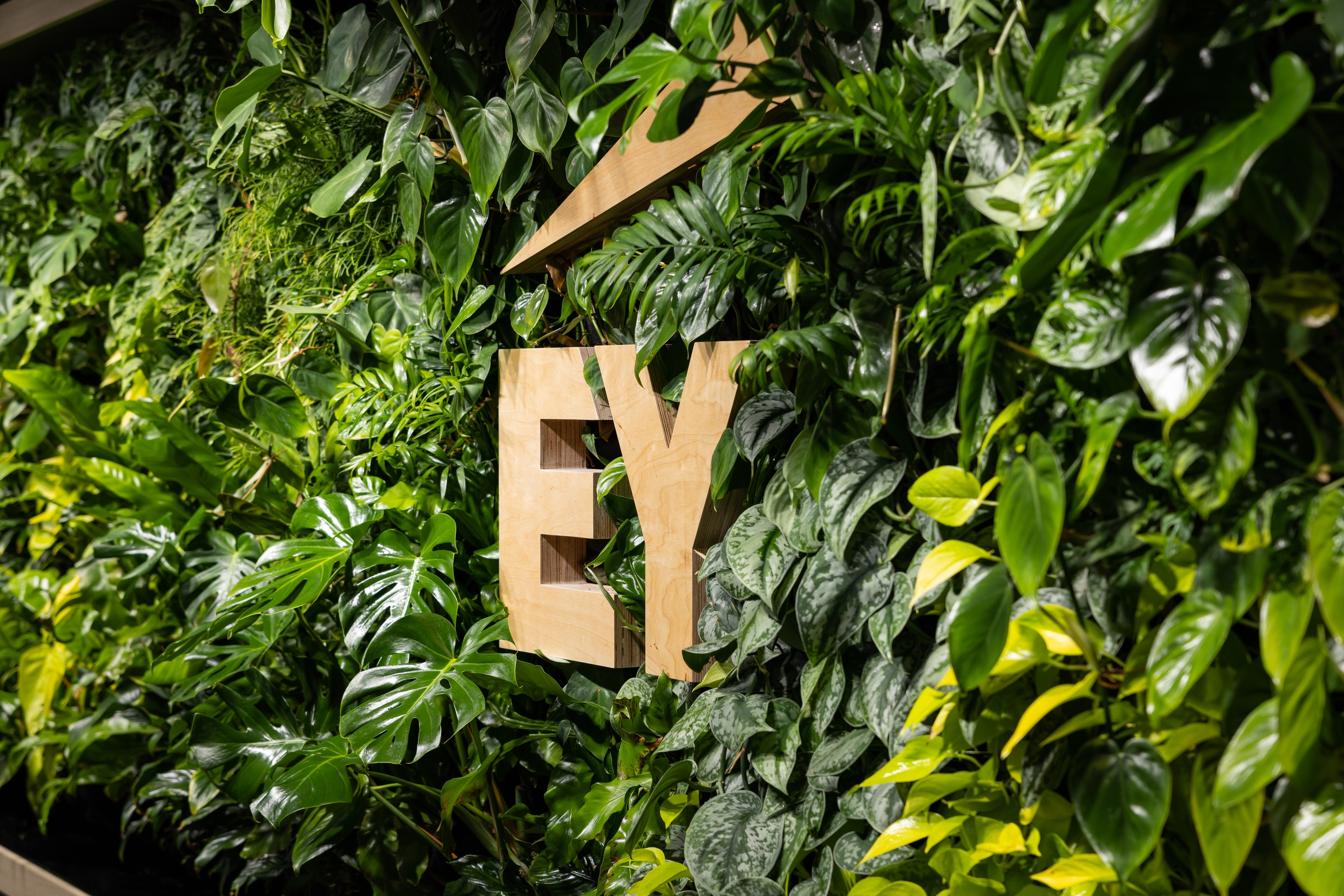
Credits relating to connection with nature are the most consequential for interior planting. They typically reward direct visual access to nature, plants, planted walls, or landscaped views, from regularly occupied space. Living walls and substantial planted volumes are weighted more meaningfully than tokenistic planters.
How does biophilic design earn innovation points under Green Star NZ?
Innovation points are awarded where a project demonstrates a strategy that exceeds the standard credit threshold or addresses an environmental issue not fully covered by the existing rating tool. Biophilic design qualifies when it is documented as a deliberate, measurable design strategy, not when plants are added as decoration.
The Terrapin Bright Green report 14 Patterns of Biophilic Design (Browning, Ryan & Clancy, 2014) is the most widely used framework internationally for documenting biophilic strategy. Projects pursuing innovation points typically document the patterns being addressed (Visual Connection with Nature, Presence of Water, Dynamic and Diffuse Light, Biomorphic Forms and Patterns), the design response, and the expected occupant outcomes.
Evidence from the Human Spaces: The Global Impact of Biophilic Design in the Workplace report (Interface, 2015), drawn from 7,600 office workers across 16 countries, found that employees in environments with natural elements reported 15% higher wellbeing, were 6% more productive, and were 15% more creative. This is the calibre of evidence that supports innovation submissions.
What specification requirements does Green Star NZ place on interior planting?
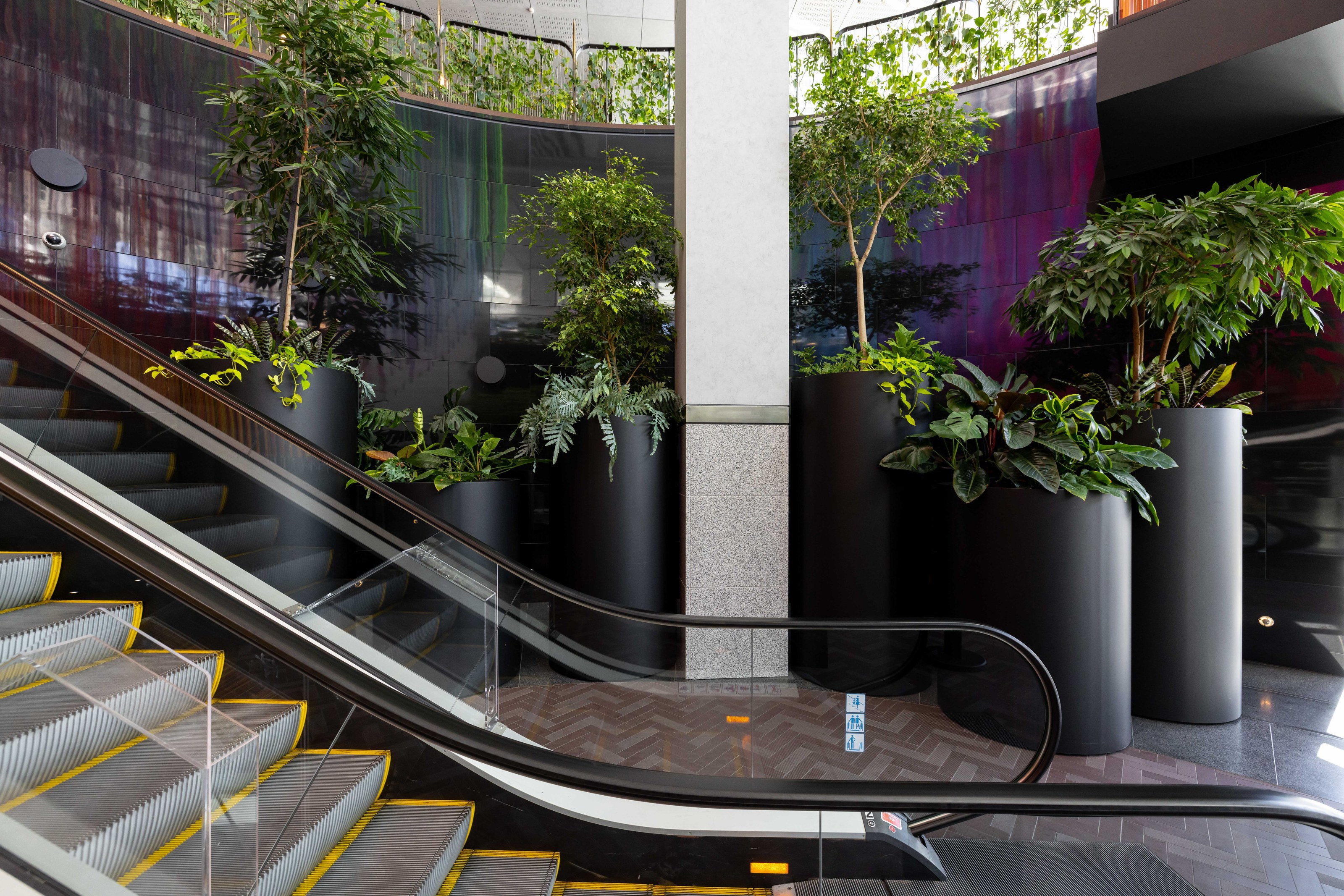
Green Star NZ does not prescribe species or system types, but assessors expect specifications to demonstrate that planting will perform under the building's actual environmental conditions. This is where many projects fail at credit verification: plants specified for ideal conditions die under real ones, and the credit is queried at post-occupancy review.
A defensible Green Star specification typically includes: documented light levels (lux readings at the planting location, not estimates), HVAC supply temperature and humidity ranges in proximity to plants, a maintenance regime with named visit frequencies, and an environmental monitoring plan where the credit relies on long-term performance.
For acoustic credit contributions, specifications should reference measured acoustic absorption data. Azkorra et al., Evaluation of green walls as a passive acoustic insulation system for buildings (Applied Acoustics, Vol. 89, 2015), found that green walls perform well at both high and low frequencies relative to common building materials. Earlier office acoustic research by Peter Costa at South Bank University, London (1990s onward), established that interior plants reduce perceived office noise through a combination of physical absorption and a psychological calming effect. Where these data points are referenced in the specification, the credit submission is materially stronger.
How does interior planting support Green Star alongside WELL certification?
Many New Zealand projects pursue both Green Star and the WELL Building Standard, and interior planting earns credit under both frameworks simultaneously. Under WELL v2, the Mind concept includes Feature M02 (Access to Nature) and Feature M09 (Enhanced Access to Nature), which directly recognise interior planting and biophilic design.
Designing once for both rating tools is more efficient than designing twice. A Connection with Nature credit submission under Green Star can typically be re-cast to satisfy Feature M02 under WELL with minor additional documentation. This is the approach GreenAir takes with project teams pursuing dual certification, and the reason early biophilic strategy decisions matter more than late-stage species selection.
Air quality credits are a separate matter. Plants are not a substitute for mechanical ventilation and filtration, and the evidence for significant VOC removal in real-world commercial conditions is mixed. Specification documents should not claim air quality credit contributions on the basis of planting alone.
What this means for New Zealand projects pursuing Green Star
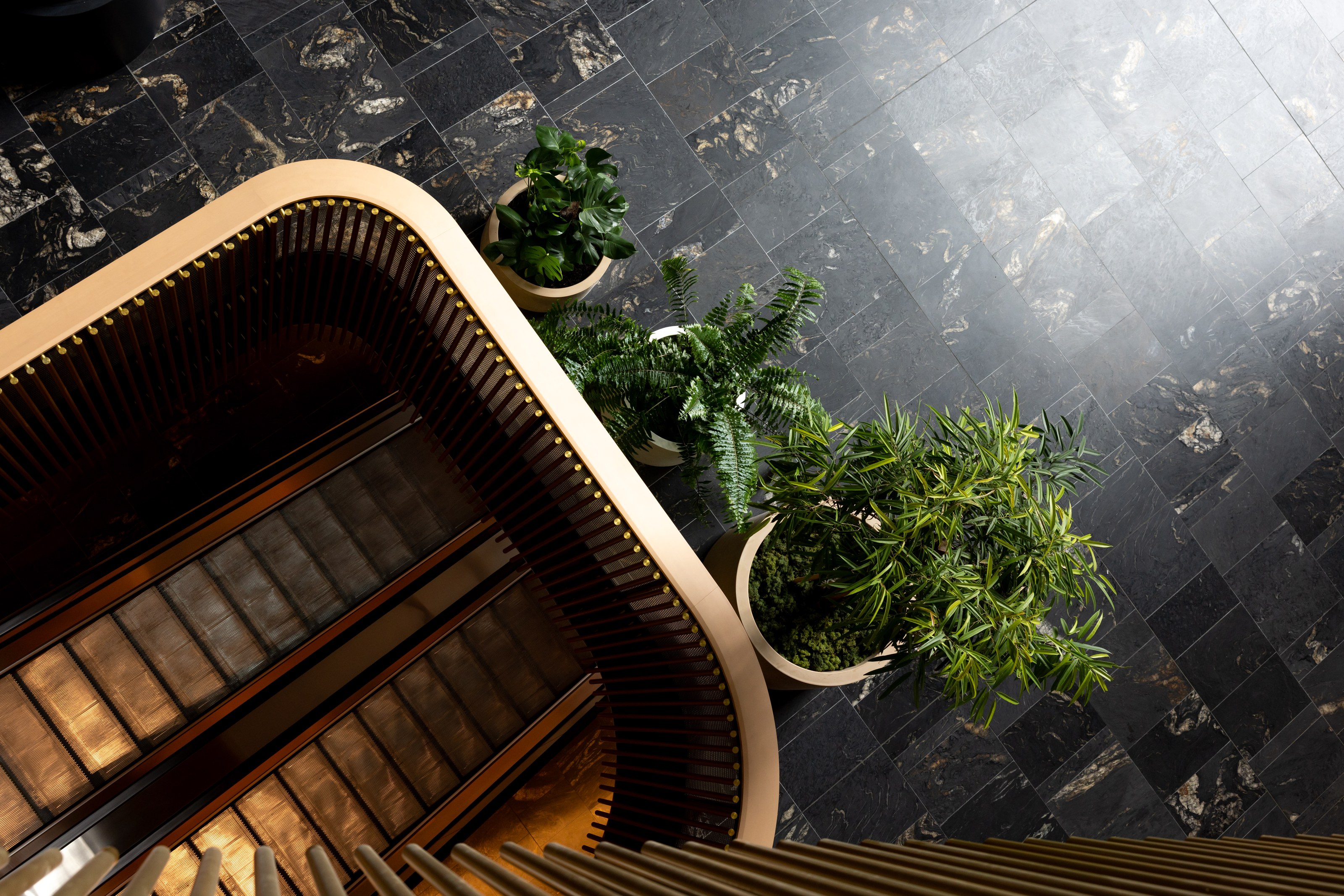
New Zealand commercial buildings present specific environmental conditions that affect Green Star planting submissions. Auckland and Wellington office stock combines high-glazing facades with deep floorplates, producing wide light-level variation across a single floor. Wellington's seismic-driven HVAC design produces drier supply air than the same building type in Sydney or Melbourne. Specifying generic plant lists for New Zealand conditions, particularly when the species data originates from European or Australian sources, is one of the most common reasons Green Star planting credits underperform at post-occupancy review.
GreenAir's installation at the Majestic Centre in Wellington uses smart sensors across 12 zones to monitor light, humidity and temperature in real time. Species are matched to measured conditions, not estimated ones, and performance data is available for ongoing credit verification. This is the distinction between plants that survive and plants that perform under Green Star scrutiny.
Green Star certification rewards intent backed by evidence. A planted wall photographed at handover means little; a planted wall that demonstrates measured performance two years on means everything. Simon Chamberlain, GreenAir
Key takeaways
- Interior planting contributes to Green Star NZ primarily through Connection with Nature, Acoustic Comfort, Visual Comfort, and Innovation credits, with realistic contributions of three to five points across these categories.
- Innovation points require documented biophilic design strategy, typically referencing the 14 Patterns of Biophilic Design framework (Terrapin Bright Green, 2014).
- Specifications must reference measured environmental conditions (lux, humidity, temperature) at the planting location, not estimated ones, to survive credit verification.
- Green walls perform well across high and low frequencies as acoustic insulation (Azkorra et al., Applied Acoustics, 2015), and interior plants reduce perceived office noise (Costa, South Bank University, 1990s onward).
- GreenAir specifies all New Zealand projects against measured site data, with ongoing monitoring at flagship installations such as the Majestic Centre, Wellington.