
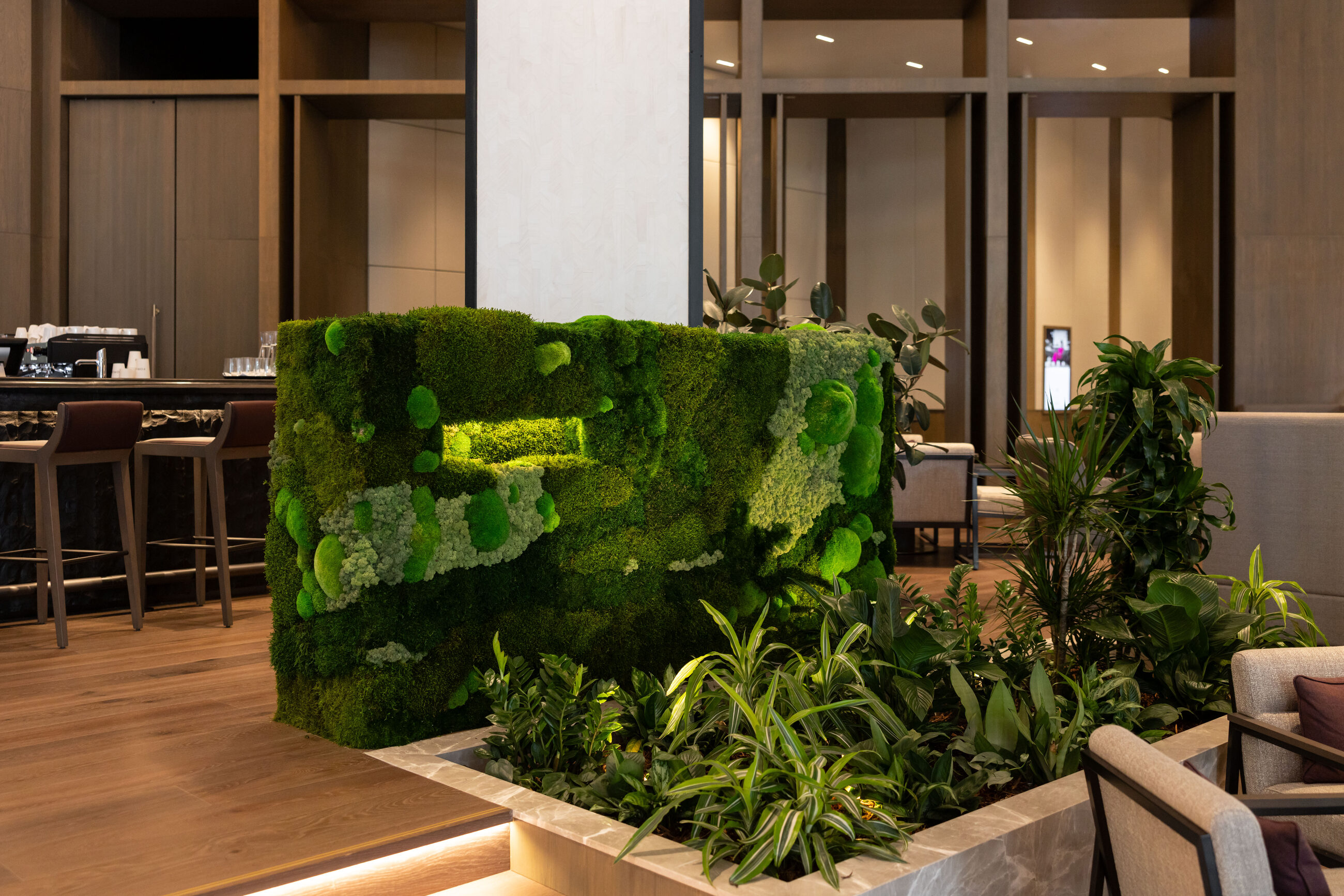
A moss wall is preserved moss, treated to stay soft and green without water, light, or trimming. GreenAir specifies moss walls in New Zealand buildings where light is poor or maintenance access is limited, and where acoustics matter, since moss panels absorb up to 96 percent of the sound that reaches them (acoustic testing, 2018 to 2023).
That makes a moss wall a genuine acoustic surface as well as a visual one, cutting perceived noise by up to 10 decibels, roughly halving how loud a room feels, with no irrigation and no upkeep beyond the occasional dust (acoustic testing, 2018 to 2023; Costa & James, 2018).
Key Takeaways
- A moss wall is preserved, not living, so it needs no water, light, or maintenance beyond occasional dusting.
- Moss panels absorb up to 96 percent of the sound that reaches them, cutting perceived noise by up to 10 decibels (acoustic testing, 2018 to 2023).
- Moss is the right call for low-light, low-access, or low-irrigation zones; a living wall suits spaces with light and water to support growth.
- GreenAir specifies the right system for each zone, so you get acoustics, greenery, and a green-rating contribution without over-engineering.
- Installed correctly and kept out of direct sun and high humidity, a moss wall holds its look for years.
What is a moss wall, exactly?
A moss wall is a preserved plant panel, not a living system. Real moss is harvested, treated with a preservation process, and fixed to a backing panel, so it stays soft and green without soil, water, or light. Where a living wall relies on ongoing irrigation and grow conditions, a moss wall is a finished acoustic and visual surface from the day it goes up.
How is a moss wall different from a living wall?
The difference is not aesthetic, it is a specification decision with consequences for light, water, and maintenance from day one.
| Feature | Moss wall (preserved) | Living wall |
|---|---|---|
| Water | None | Regular irrigation |
| Light | None needed | Natural light or grow lighting |
| Maintenance | Occasional dusting | Pruning, feeding, pest management |
| Sound absorption | Up to 96% (0.96 rating) | Good, varies by planting |
| Best for | Low-light, low-access, acoustic zones | Zones with light and irrigation access |
Does a moss wall need light, water, or maintenance?
No. Because the moss is preserved rather than living, it needs none of the three. The only upkeep is occasional dusting or light vacuuming to keep the surface clean. Keep it out of direct sunlight and consistently high humidity, since both shorten the life of the preservation over time, and a moss wall will hold its look for years.
How much sound does a moss wall absorb?
Moss panels absorb up to 96 percent of the sound that reaches them, an absorption rating of 0.96, cutting perceived noise by up to 10 decibels (acoustic testing, 2018 to 2023). A 10 decibel drop is heard as roughly half the loudness. Combined with the calming effect of visible greenery, which reduces perceived noise by a further 5 to 10 decibels in office settings (Costa & James, 2018), moss performs as a true acoustic material, not a soft finish with a side benefit.
When should architects specify a moss wall?
Specify moss where light is poor, such as internal corridors, lift lobbies, and basement-level spaces. Specify it where irrigation is impractical, such as heritage buildings or tenancy fit-outs without an approved wet area. Specify it where maintenance access is restricted, such as secure zones or spaces used outside normal hours. Where natural light and water are available and the brief calls for a visibly growing system, a living wall is the better fit, and GreenAir will say so.
Where GreenAir uses moss walls in New Zealand
GreenAir specifies moss in commercial lobbies and workplace zones, including at the ANZ Centre on Albert Street in Auckland, where internal areas carry limited natural light. A moss wall needs none of the sensor-led monitoring GreenAir runs for living systems, because there are no light, humidity, or temperature conditions to track once it is installed. Choosing moss or living for each zone is the first question GreenAir answers on a project, not an afterthought, and getting it right first time is what makes the result look effortless.
Moss and green building ratings
A moss wall contributes most directly to acoustic comfort, and it supports the sense of nature and calm that workplace wellbeing standards reward. On projects targeting a specific green-rating pathway, GreenAir advises which system earns the credit you are aiming for, and often specifies moss for acoustics alongside living planting elsewhere, so each part of the scheme does the job it is best at.
What this means for New Zealand buildings
Half the commercial floor plates I read in Auckland have a lift lobby or an internal corridor that never sees daylight. That is a moss wall, specified correctly the first time.
At the ANZ Centre, that distinction shaped the brief before a single species was chosen. Reading a building's light conditions zone by zone, the way GreenAir does on every project, is what decides whether a space gets a living system or a preserved one.
A moss wall is a preserved acoustic and visual surface that brings greenery to the places a living wall cannot easily reach. Specified well, it needs nothing but the occasional dust and holds its look for years. GreenAir applies the same conditions-first logic across New Zealand buildings, from the sensor-monitored living systems at the Majestic Centre to the low-light lobbies where moss is the right call.
Considering a moss wall or a living wall for your next fit-out?
FAQs
Is a moss wall alive?
No. It is real moss that has been preserved, so it does not grow, photosynthesise, or need watering, though it remains natural material rather than synthetic.
How long does a moss wall last?
Kept indoors and out of direct sunlight and high humidity, a moss wall holds its look for years. Exact lifespan depends on the preservation product and the site conditions.
Does a moss wall really improve acoustics?
Yes. Moss panels absorb up to 96 percent of the sound that reaches them at voice frequency, which is why GreenAir specifies them in spaces where noise is a genuine problem.
Does GreenAir install moss walls in New Zealand?
Yes, including commercial lobbies such as the ANZ Centre in Auckland, where low-light internal zones suit a preserved system over a living one.
Should I choose a moss wall or a living wall?
It depends on the zone. Moss suits low-light, low-access, or acoustic-led spaces; a living wall suits spaces with light and water for growth. GreenAir specifies the right one for each area.